

Politics

Hegseth calls protesters 'ingrates' as they try to drown out DC National Guard event

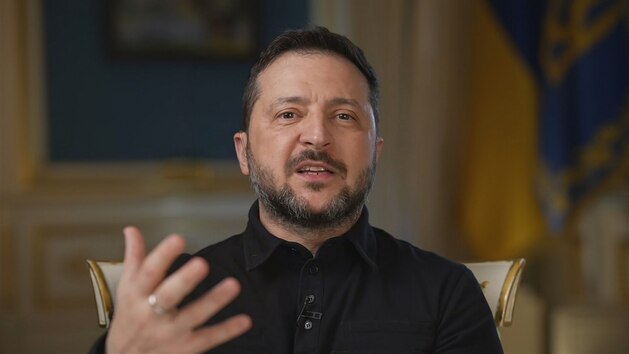
Secretary of War Pete Hegseth speaks during an event with U.S. President Donald Trump in the Oval Office of the White House on June 22, 2026, in Washington, DC. President Trump signed two orders on quantum computing. (Photo by Andrew Harnik/Getty Images)

(WASHINGTON) -- Secretary of Defense Pete Hegseth on Thursday dismissed protesters chanting "Guard go home" outside a ceremony in Washington, D.C., honoring National Guard troops as their presence in the nation's capital approaches the one-year mark and has nearly doubled in recent weeks to roughly 5,000 personnel.

"It's the sound of ingrates," Hegseth told a formation of some 250 National Guardsmen gathered at a park nestled in Washington D.C.'s northwest neighborhoods. "People who are so blinded by ideology they can't see law and order and common sense in front of them. There's nothing ideological about this group."

Outside the park, dozens of protesters gathered in front of a security perimeter formed by National Guard troops and law enforcement, chanting through megaphones and blowing whistles while drums and a trombone added to the noise as they sought to drown out the speeches. The peaceful demonstration remained largely uneventful.

Speaking in front of the Meridian Hill Park fountain that was recently repaired by the Department of the Interior after years of being inoperative, Hegseth was joined by National Guard chief Gen. Steven Nordhaus, acting Attorney General Todd Blanche, Brig. Gen. Leland Blanchard, commander of the District of Columbia National Guard, and senior White House aide Stephen Miller, who has been an architect of the Trump administration's National Guard mission in Washington D.C. Each praised the troops serving in Washington.

The deployment has largely focused on high-visibility patrols through downtown corridors and major tourist areas, far from the city's high-crime areas, along with civic support missions, including trash collection. Troops are commonly armed with 9mm SIG Sauer M17 pistols or 5.56mm M4 rifles. 

National Guard troops have been deployed to Washington since last August, with states maintaining a steady rotation of personnel into the city. The broad mission has placed military personnel on civilian streets in an unprecedented domestic role, though National Guard troops retain very limited legal authority. 

The National Guard also maintains its constant rotation of units to missions in Africa, Europe and in the Middle East amid the war with Iran. Troops often serve in a part-time capacity, juggling their Guard duty with typical civilian careers. 

The force has been drawn overwhelmingly from Republican-led states. The D.C. National Guard itself accounts for about 500 troops, roughly one-quarter of its force, serving on the mission.

South Carolina has deployed roughly 700 troops, Georgia nearly 800 and Mississippi about 500, according to National Guard figures. Other states with sizable contingents include West Virginia, Nebraska, Florida and Louisiana.

Democratic-led states and U.S. territories have begun sending troops to D.C. in recent weeks, but only for events tied to America's 250th anniversary celebration and an expected surge in tourism. 

Earlier this week, Michigan's Democratic Gov. Gretchen Whitmer warned she would withdraw her state's troops if they were assigned to President Donald Trump's ongoing "Safe and Beautiful" mission rather than July 4th-related events. 

In practice, however, drawing a distinction between holiday security operations and the Guard's broader mission in Washington, D.C., may be difficult. Much of the ongoing mission is already concentrated around the National Mall and downtown transit stations, where tourists and local residents celebrating the holiday are expected to converge, one U.S. official explained. National Guard units from other states are frequently sent to Washington for major events such as presidential inaugurations. 

Estimates have shown the Guard deployment is more expensive than using additional police officers or municipal workers.

An analysis from the Niskanen Center found the cost differential between troops and local law enforcement was roughly $607 per Guardsman per day compared to about $384 per day for a D.C. police officer.

The report also noted that the National Guard’s presence in D.C. has not reduced violent crime but has coincided with a decline in property crimes.

One estimate from the Congressional Budget Office found the National Guard's D.C. footprint will cost at least $660 million this year, but it doesn't account for the additional surge of troops for the summer.

A White House spokeswoman dismissed the Niskanen analysis and insisted the National Guard presence had driven down crime and improved quality of life in the District.

Two National Guard members from West Virginia were shot in the head while on patrol in November. Army Spc. Sarah Beckstrom, 20, died from her injuries. U.S. Air Force Staff Sgt. Andrew Wolfe, 24, was critically injured and is still recovering, his family says. 

Rahmanullah Lakanwal, 30, an Afghan national and suspected gunman, pleaded not guilty to the shootings. The Department of Justice said in June it is determining whether to seek the death penalty.

Copyright © 2026, ABC Audio. All rights reserved.

Olympian David Hearn indicted for alleged vandalism of Reflecting Pool

(WASHINGTON) -- Three-time U.S. Olympian David Hearn has been indicted in the Superior Court of the District of Columbia for allegedly "maliciously" destroying lining at the Lincoln Memorial Reflecting Pool.

This is a developing story. Please check back for updates.

Copyright © 2026, ABC Audio. All rights reserved.

EMS personnel attended to 'unconscious' person at Mitch McConnell's home, audio suggests

Sen. Mitch McConnell (R-KY) speaks during a Senate Appropriations Subcommittee hearing on Capitol Hill on December 3, 2025 in Washington, DC. (Andrew Harnik/Getty Images)

(WASHINGTON) -- Emergency medical personnel were dispatched to the Washington home of Republican Sen. Mitch McConnell last month to attend to an unconscious person who appeared to be in cardiac arrest, according to EMS dispatch audio reviewed by ABC News.

While the audio does not indicate who the person is, the incident occurred on the same day that McConnell was hospitalized on June 14. 

At 8:36 a.m., a dispatcher directed an "ALS response" ambulance to McConnell's residence for an "unconscious" person. "ALS" stands for Advanced Life Support.

At 8:42 a.m., the EMS responder, identified as "Medic 3," responded to the dispatcher, saying "inform supervisor CPR in progress." 

At 8:43 a.m., the dispatcher said "EMS to respond, for cardiac arrest," and once again repeated McConnell's address.

McConnell is not named directly in any of the audio.

A spokesperson for McConnell declined to comment on the audio and did not provide any update on McConnell's current condition.

On June 14, McConnell's spokesperson confirmed he was admitted to the hospital, adding "he is receiving excellent care." It's unclear if McConnell remains in the hospital. 

Senate Majority Leader John Thune said on June 15 he had spoken with McConnell following the Kentucky senator's hospitalization. Thune told reporters McConnell was "dialed in" and "wants to be back."

Republican Whip John Barrasso also spoke to McConnell that day, a spokesperson for Barrasso confirmed. Barrasso said McConnell was "engaged" and eager to return to the Hill.

On June 22, McConnell's office indicated he was still working on Senate business, but would not be appearing on Capitol Hill for votes.

"Senator McConnell is still working closely with staff on Senate business and Kentucky matters as he continues his recovery. However, he will not be voting this week," a McConnell spokesperson said on June 22. 

McConnell has not yet returned to the Senate and was last seen on the Hill on June 11.

This is the latest in a string of medical incidents that the seven-term senator and longtime Republican leader has faced in recent years. McConnell, 84, stepped down from leadership in 2024 and is set to retire at the end of his term in January.

Copyright © 2026, ABC Audio. All rights reserved.

ICE arrests 10,000 illegally in US in 5-day span

Immigration and Customs Enforcement (ICE) agents patrol Dulles International Airport on March 24, 2026 in Dulles, Virginia. (Heather Diehl/Getty Images)

(WASHINGTON) -- Immigration officials have quietly ramped up arrests in the recent days, taking 10,000 people who they say are illegally in the United States into custody within a five-day space, sources familiar with the figures said Thursday.

The source said the significant number of arrests have occurred around the United States since last week.

The new goal for immigration authorities is to arrest at least 2,000 per day going forward, according to sources. Last year, in a meeting with senior Immigration and Customs Enforcement officials, White House and senior Department of Homeland Security officials urged a goal of 3,000 arrests per day, a source familiar told ABC News.

"Since Day One, DHS law enforcement has been delivering on President Trump’s promise to the American people to arrest and deport criminal illegal aliens including murderers, rapists, pedophiles, gang members, and terrorists," a DHS spokesperson said in a statement.

During the immigration crackdown, President Donald Trump has pledged to target the "worst of the worst" criminal offenders among the nation's migrants. While the criminal histories of those arrested in this latest sweep is not yet clear, the DHS spokesperson said that "nearly 70% of ICE arrests are of illegal aliens charged or convicted of a crime in the U.S."

The recent arrests have been carried out with little publicity, according to sources, after DHS Secretary Markwayne Mullin pledged during his confirmation hearing earlier this year to keep the agency out of the headlines and do the work quietly. That is in contrast to former DHS Secretary Kristi Noem, who wanted maximum publicity for ICE enforcement.

ICE has a new pick to lead the agency, Lance Schroyer, a top Mullin ally and former Oklahoma state trooper who has no federal immigration experience. 

The New York Times first reported the details.

Mike Howell, who serves as the president of the Trump-aligned Oversight Project and a leader of the Mass Deportation Coalition, applauded the arrests numbers, but said there should "transparency and meaningful metrics on deportation-related statistics," which are not publicly available.

"There have been so many numbers thrown around in press releases, estimates, extrapolations, and puffery that most people are just kind of immune to it and waiting to see the hard data that's being withheld," Howell said.

Copyright © 2026, ABC Audio. All rights reserved.
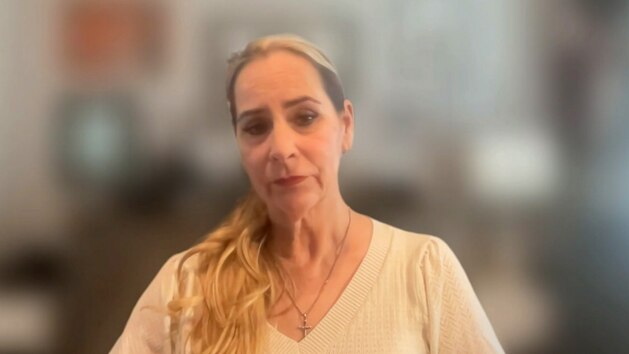

Former CIA Director John Brennan sues Trump, others to preserve records from investigations

Former Director of the Central Intelligence Agency John O. Brennan is seen on October 24, 2022 in Philadelphia, Pennsylvania. (Gilbert Carrasquillo/GC Images)

(WASHINGTON) -- Former CIA Director John Brennan on Wednesday sued President Donald Trump and his top law enforcement officials to force them to preserve records related to investigations into Brennan.

This is a developing story. Please check back for updates.

Copyright © 2026, ABC Audio. All rights reserved.
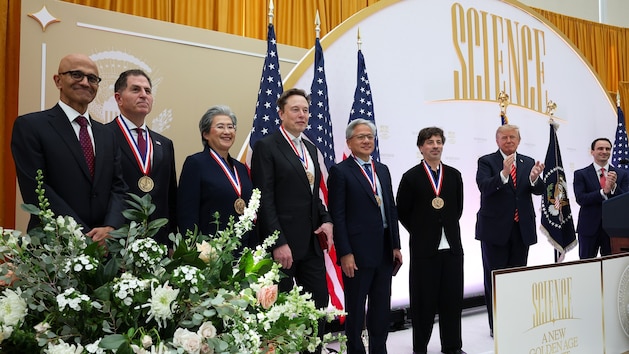

Trump takes 1st flight on Air Force One gifted by Qatar, but retrofitted using taxpayer dollars

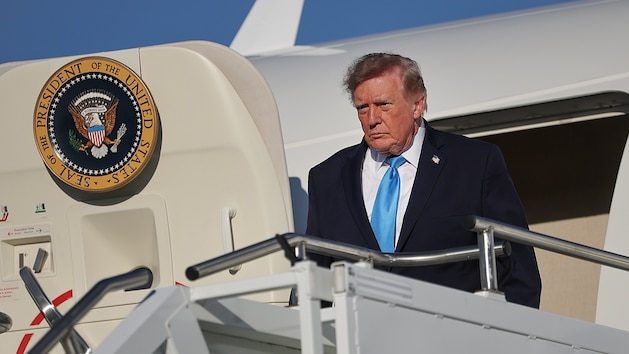
U.S. President Donald Trump arrives at Air Force One on July 01, 2026 at Joint Base Andrews, Maryland. (Andrew Harnik/Getty Images)

(WASHINGTON) -- President Donald Trump on Wednesday is taking the first ride on the newly retrofitted Air Force One 747, which was donated by the Qatari royal family.

Trump, taking the retrofitted jet to North Dakota, touted it as "maybe the greatest commercial plane ever built."

"I said to Boeing, 'What's the best one?' They said this is the best plane ever built, and you're going to have the privilege of flying it, and I have a privilege also of flying it," Trump told reporters before boarding the jet -- which is approximately 14 years old -- at Joint Base Andrews.

ABC News Chief White House Correspondent Mary Bruce, who is traveling with Trump on his trip, asked him about the use of taxpayer dollars to modify the luxurious plane, which likely only will be used by him.

"Well, it cost very little relative to what it would cost if we did it a different way," Trump said.

The Qatari-gifted jet worth $400 million raised questions from some lawmakers and ethics experts over the unprecedented foreign gift. But Trump on Wednesday gave credit to the Qatari government.

"Frankly, we couldn't build a plane like this because we wouldn't be willing to spend the kind of money necessary. They spent top dollar," the president said.

The U.S. Air Force has been modifying the jet in Texas since September to meet the security, communications and other needs to transport the president. The Air Force had estimated it would cost less than $400 million to retrofit the gift.

The plane is to be used as the new Air Force One until shortly before Trump leaves office, at which time ownership of the plane will be transferred to the Donald J. Trump Presidential Library Foundation, sources familiar with the proposed arrangement have told ABC News.

Boeing was already contracted by the United State government to build a new fleet of jets that would serve as the next-generation Air Force One, expected to be delivered in 2028 around the time Trump leaves office.

Trump on Wednesday said the gifted plane was needed, citing the age of the past jet.

"Our Air Force One was 35, 36 years old, and it would be parked next to the new ones like this, and it really didn't look appropriate for our country. So we're very proud of this," Trump said.

Trump is traveling to North Dakota to participate in a Freedom 250 Train Ride and Welcome Ceremony and to tour the Theodore Roosevelt Presidential Library before delivering remarks in Medora.

"I'm excited about the first flight. It's something nobody's ever seen anything like it, even you people, with all your experience and all of your talent, you will never see anything like this," Trump said just before his departure. "So, they just completed it. They made it appropriate for a president, that means the security and all of the different bells and whistles they put on. Very complex stuff, but it's really quite something, and this is a plane that the United States of America should have."

Inside the Air Force One

ABC's Bruce, part of the press pool for the president's visit to North Dakota, flew on the retrofitted plane. Reporters were not given a full tour on the flight to North Dakota and remained confined to the press cabin.

The interior color scheme is soft beige and tan with some gold hues with dark wood accents. The carpet is beige with dark tan and cream stripes.

The press cabin contains 14 lie-flat pods, including large tan leather seats with luxury features such as lumbar supports and massage functions. Televisions on the back of each seat played a cable channel of the White House's choosing. During Wednesday's flight, it aired Fox News.

White House spokesperson Steven Cheung also shared pictures of the interior on his X account.

Copyright © 2026, ABC Audio. All rights reserved.
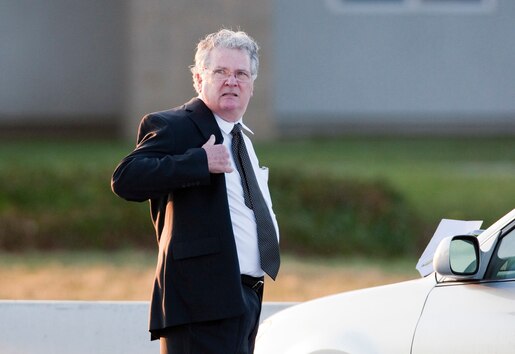

Trump earned over $1.4 billion from crypto ventures in 2025, financial disclosure shows

U.S. President Donald Trump delivers remarks at the Mack Trucks Lehigh Valley Operations facility on June 23, 2026 in Macungie, Pennsylvania. (Andrew Harnik/Getty Images)

(WASHINGTON) -- President Donald Trump earned more than $1.4 billion from his cryptocurrency ventures in 2025, according to his personal financial disclosure released on Tuesday by the Office of Government Ethics.

The over-900-page disclosure, which covers last year, showed that the president earned billions of dollars in revenue from his properties around the world and from his foray into cryptocurrency. The president also received numerous gifts totaling more than $370,000, according to the disclosure.

But one of the standout performers last year was the president’s cryptocurrency investments. 

The president's disclosure listed earnings of $636 million from CIC Digital LLC, a cryptocurrency firm affiliated with the Trump Organization. The vast majority of that income came from a $635 million license agreement with Celebration Coin to sell the president’s $TRUMP meme coin, which he launched days before his second inauguration, billing himself as the "crypto president."

Trump also reported earning an additional $526 million from the sale of cryptocurrency tokens through the Trump-connected firm World Liberty Financial. He earned another $65 million from sales of equity in WLF’s holding company.

World Liberty Financial came under scrutiny earlier this year after the firm reportedly sold a $500 million stake to a member of the Emirati royal family shortly before Trump’s inauguration.

The president reported another $196,875,000 in income from investments in Stablecoin Holdco, LLC, the parent holding company of World Liberty Financial.

The president also reported earning at least $389 million from his properties and golf courses and clubs in the U.S. and Scotland, including over $77 million alone from Mar-a-Lago.

Outside of his businesses and physical holdings, the president received a number of gifts last year valued in the hundreds of thousands of dollars., according to the disclosure.

One standout gift was a statue from Sticker Mule CEO Anthony Constantino, which depicted the now-iconic image of the president with his fist raised following the attempted assassination in Butler, Pennsylvania. That statue, which now sits prominently at Trump National Golf Club in Florida, was estimated at $250,000.

Trump also received several tickets to a variety of sporting events as gifts, including 10 Super Bowl LIX tickets, 10 tickets to the FIFA men’s World Cup, and 30 tickets to two UFC fights. The president also received tickets to the Ryder Cup, the US Open, and the Daytona 500. 

Trump also profited from a variety of lawsuits against media and technology companies, earning $86 million in income from legal settlements throughout the year. 

Copyright © 2026, ABC Audio. All rights reserved.
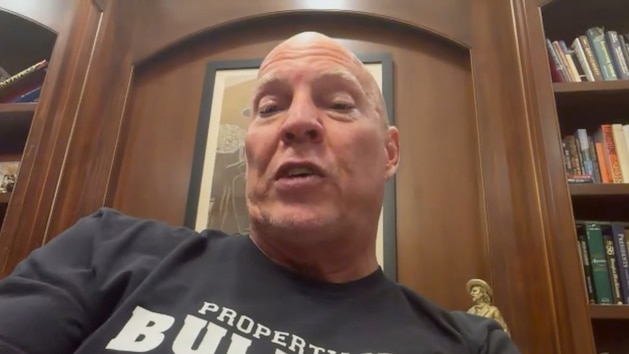

Democratic socialist Melat Kiros defeats longtime incumbent Democrat Rep. Diana DeGette in Colorado primary: AP projection

Melat Kiros participated in a League of Women Voters Congressional District 1 candidate forum at Montview Presbyterian Church on May 28, 2026, in Denver, Colorado. (Photo by RJ Sangosti/MediaNews Group/The Denver Post via Getty Images)

(NEW YORK) -- Melat Kiros, a 29-year-old attorney and democratic socialist, will win the Democratic primary for U.S. House in Colorado's 1st Congressional District, the Associated Press projected, triumphing over longtime incumbent Rep. Diana DeGette and notching another win for the left wing of the Democratic Party over established incumbents.

Kiros' projected win is a stunning victory for a political newcomer and yet another apparent sign of Democratic voter discontent with incumbents, just a week after three insurgent candidates triumphed against incumbent or incumbent-backed candidates in New York City congressional races.

The primary challenger, who was fired from her law firm in 2023 after writing an open letter criticizing her employers' response to pro-Palestinian protests, campaigned on channeling voters' anger with the political system; her campaign also tapped into the strength of local and national branches of the Democratic Socialists of America.

DeGette, who has served in the House for around three decades, had argued that her experience, including in leadership roles during President Donald Trump's impeachment proceedings, made her effective at pushing back against the Trump administration.

Kiros will face Republican nominee Christie Peterson, an accountant, who was uncontested in the GOP primary. The Cook Political Report rates the seat, which is based around Denver, as solidly Democratic.

Another victory for progressive wing in gubernatorial primary

The Associated Press also projected on Tuesday night that Attorney General Phil Weiser will win the Democratic primary for governor in Colorado, triumphing against Sen. Michael Bennet.

The results could potentially be seen as another sign of Democratic voters' dissatisfaction with Washington and incumbents in Congress, even though the race was technically for a state position.

Weiser, who served in the Obama administration and as Colorado's attorney general since 2019, had positioned himself as the insurgent in the race against Bennet, linking the longtime senator to Washington and gridlock in Congress. Incumbent Democratic Gov. Jared Polis is term-limited.

But there was better news for another congressman from Colorado. The Associated Press projected Tuesday night that incumbent Sen. John Hickenlooper will win the Democratic primary for Senate in Colorado, putting him on a glide path back to Congress as he runs for a second term.

Hickenlooper triumphed over a primary challenge from state Sen. Julie Gonzales, who ran a progressive campaign and notched the endorsement of left-leaning organizations.

Inside the Melat-DeGette race

Still, most of the attention was focused on the 1st Congressional District.

Ahead of Tuesday's primary, Kiros told ABC News she hoped to build on the movement's momentum from last Tuesday in New York.

"Ultimately, folks are really tired of the party failing to meaningfully represent the values and policies that are extremely popular with our base," she said. "And we're looking for leaders that are unbought and unafraid to stand up to a lot of these corporations and special interests that have gotten us into this mess in the first place."

Kiros has also been outspoken about criticism of Israel and its conduct in Gaza, another issue that has divided Democrats and played a major role in the New York primaries. She recently faced some pushback for not calling the June 2025 firebombing in Boulder, Colorado, of on a group of demonstrators calling for the release of Israeli hostages antisemitic, although she condemned the violence and said she is committed to combatting antisemitism.

Kiros told ABC News on Monday that the attack was “a horrific attack on a group of Jewish people that were just engaging in peaceful protest,” and said that she is committed to combatting hate in all forms, including antisemitism; that responsibility also includes “making sure that we are rejecting this conflation of the state of Israel's actions with Judaism and with the Jewish people, and making sure that we are preventing that kind of conflation from leading to the kind of horrific attacks that a lot of Jewish people are afraid of.”

While Kiros netted the endorsement of progressive stalwart Sen. Bernie Sanders, an independent, and some left-leaning groups, the race did not break down evenly along ideological fault lines.

DeGette is a leading member of the Congressional Progressive Caucus who has led Democratic messaging on abortion rights and served as a House impeachment manager during Trump's second impeachment trial.

Unlike some incumbent Democrats facing primaries, she has criticized Israel's handling of the war in Gaza and voted against additional U.S. military aid to Israel.

"Denver knows I don't back down. That's why I'm taking on Donald Trump to protect our reproductive freedom, abolish ICE, and pass Medicare for All. Together we'll win and deliver on our progressive values," DeGette said in a statement to ABC News before the primary.

In a recent interview with ABC affiliate KMGH-TV, DeGette argued that her time in Congress was an asset to her constituents.

But that long record also made her a target for frustrated progressives, who sense momentum after democratic socialists Darializa Avila Chevalier and Claire Valdez defeated establishment-backed Democrats in two New York City primaries -- including the chairman of the Congressional Hispanic Caucus -- last week, with the help of democratic socialist Mayor Zohran Mamdani.

"They see Melat as someone who has put up a fight -- not just against Republican fascism, but also against the Democratic establishment that has failed voters," Usamah Andrabi, communications director for Justice Democrats, told ABC News.

The group helped Kiros and her allies knock on tens of thousands of doors and make more than 200,000 calls to potential voters since last week, according to the Justice Democrats.

DeGette's record "is very progressive, and she's not a moderate," Doug Friednash, an attorney who was chief of staff to Hickenlooper, told ABC News. "A lot of young voters are demanding change ... they look at rising health care costs, gas prices, and there's a view that the establishment hasn't done enough."

Elsewhere, in Colorado's 8th District, a battleground seat currently held by a Republican, Democrat Manny Rutinel, a 31-year-old state representative, was projected by the Associated Press to win the primary for the Democratic nomination against former state lawmaker Shannon Bird. 

Copyright © 2026, ABC Audio. All rights reserved.

Trump says 'too bad' SCOTUS upheld birthright citizenship, pushes legislation to end it

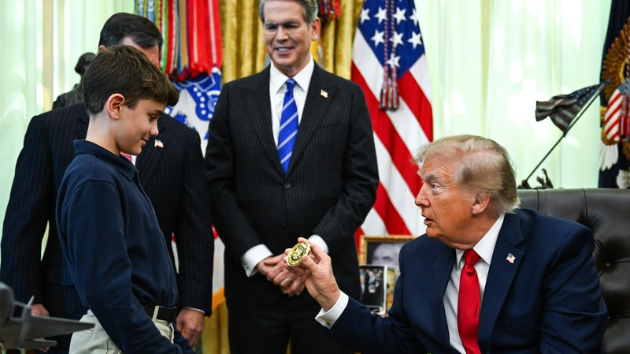
U.S. President Donald Trump attends a meeting with NATO Secretary-General Mark Rutte in the Oval Office of the White House on June 24, 2026, in Washington, DC. Secretary-General Mark Rutte is meeting with the President before the annual NATO summit next month and as the Pentagon does a six-month review of American forces in Europe. (Photo by Andrew Harnik/Getty Images)

(WASHINGTON) -- President Donald Trump brushed off his loss after the Supreme Court rejected his attempt to end birthright citizenship -- rooted in the 14th Amendment -- on Tuesday, saying the decision is "too bad for the Country" and insisting that he can "easily make it up in Congress through Legislation."

The court ruled in a 6-3 decision to reject Trump's executive order that he issued on the first day of his presidency, with Chief Justice John Roberts writing for the majority, "Citizenship, then and now, was the right to have rights -- to freely participate in our political community. The Framers of the Fourteenth Amendment extended that promise to every free-born person in this land. We keep that promise today."

Trump responded to the court's decision with a post on his social media platform, writing, "The Supreme Court upheld Birthright Citizenship, which is too bad for our Country, but we can easily make it up in Congress through Legislation, with the support of the President, that has now been determined during this process," he wrote on his social media platform.

"No long and unwieldy Constitutional Amendment is necessary! Congress should start TODAY to work on ending expensive and unfair to our Country, Birthright Citizenship," he added.

Birthright citizenship is rooted in both the Constitution and 1940 federal citizenship law. But even if the law were to be changed, this would likely be challenged in court on constitutional grounds with the possibility of the issue making its way back to the Supreme Court. 

ABC News reached out to the White House for more information about how the president would use Congress as a workaround for the court's decision and if he is prepared for the issue to potentially return to legal scrutiny, but the White House referred questions back to the president's post. 

On Monday, Trump said he would "accept" the results of the Supreme Court and acknowledged that "it's up to them."

In a subsequent post Tuesday, Trump again reiterated his desire to "correct" the birthright citizenship case in Congress while touting other cases that he won before the court.

House Speaker Mike Johnson, speaking at a House Republican news conference before Trump posted, said he was "very disappointed" with the decision and that Congress will look at amending the Constitution to address the issue.

"I think it subjects the country to serious challenges going forward and we'll have to deal with it as a Congress," Johnson said, saying the policy has been "grossly abused."

"I'm sure we will continue to look at that. I'm sure the conclusion from this opinion is going to be you've got to amend the Constitution to fix that," he said.

Johnson acknowledged a constitutional amendment would be "very complicated" and a "many-years-long process," but said he thought it was likely the only way forward. 

Amending the Constitution would take a two-thirds majority in both chambers of Congress ratification by three-quarters of the states.

Copyright © 2026, ABC Audio. All rights reserved.


Supreme Court to review AR-15 firearm bans

The West Front of U.S. Supreme Court on June 29, 2026 in Washington, DC. (Tom Brenner/Getty Images)

(WASHINGTON) -- The Supreme Court on Tuesday said it will decide later this year whether state bans on the possession of AR-15 firearms and similar semi-automatic "assault style" guns violate the Second Amendment. 

Ten states plus D.C. ban the weapons, which have been used in many of the deadliest mass shootings in U.S. history, including Sandy Hook Elementary in Newtown, Connecticut, in 2012 and Uvalde, Texas, in 2022.

The court will be reviewing challenges to bans from Cook County, Illinois, and Connecticut. Both bans were previously upheld by federal appeals courts. 

Gun rights groups say the bans are a violation of their Second Amendment rights.

Separately, the justices rejected a series of appeals from the National Rifle Association and other Second Amendment advocates seeking to strike down federal and state bans on the purchase and possession of handguns and handgun ammunition for 18-20-year-olds. 

The decision means the minimum age of 21 to purchase a handgun will remain in effect, at least for now.

The justices did not explain their decisions which came down in a standard end-of-term orders list. The court will hear arguments again in the fall.

The Supreme Court weighed in on guns this term as well.

Earlier this month, the court struck down a Hawaii law that prohibits the carry of a firearm onto private property that is open to the public unless the property owner gives express consent. The ruling was a setback for gun control advocates that had argued the measures were necessary for public safety in places like shopping malls, bars, restaurants, theaters, farms, arenas and private beaches.

Copyright © 2026, ABC Audio. All rights reserved.

Supreme Court rejects Trump’s attempt to end birthright citizenship

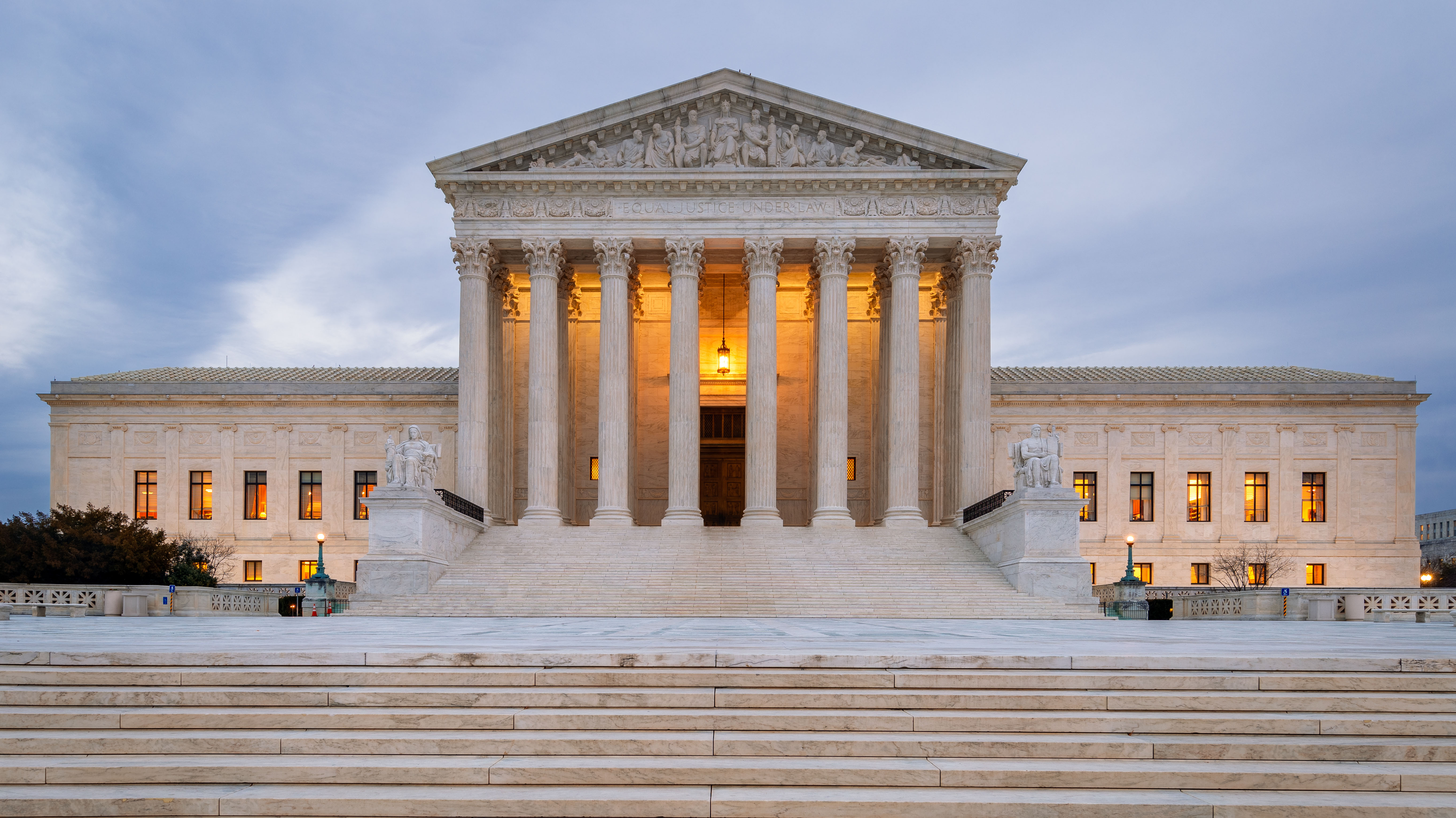
Supreme Court building (Thanasis/Getty Images)

(WASHINGTON) -- The Supreme Court on Tuesday rejected President Donald Trump's attempt to end birthright citizenship in the U.S. by executive order, reaffirming more than a century of legal precedent and national tradition that babies born on American soil are automatically American citizens.

The 6-3 decision is a blow to Trump, who had lobbied the court to uphold his Day 1 order and attended oral arguments in the case, becoming the first sitting president to do so.

Chief Justice John Roberts wrote: "Citizenship, then and now, was the right to have rights -- to freely participate in our political community. The Framers of the Fourteenth Amendment extended that promise to every free-born person in this land. We keep that promise today."

Justices Clarence Thomas, Neil Gorsuch and Samuel Alito dissented from the decision. Thomas and Gorsuch wrote that neither the Constitution nor federal law "guaranteed citizenship to persons who were not domiciled in the United States."

Thomas argued that domicile, or the place of legal permanent home, of a child's parents is the appropriate indicator of a child's citizenship, given the nation's history and tradition.

Trump had argued that children born to unlawful immigrants and temporary visitors, like tourists and foreign students, do not qualify for citizenship under terms of the 14th Amendment, which was enacted after the Civil War to address the status of former slaves and their descendants.

Immigrant advocates and civil liberties groups challenging the policy change warned that it would harm hundreds of thousands of children born every year to non-citizen parents and create a bureaucratic nightmare for older Americans, who would no longer be able to prove citizenship simply with a birth certificate.

"The court's decision reaffirms a fundamental American promise -- if you are born here, you are a citizen. A president cannot change the Constitution by executive fiat," said ACLU legal director Cecilia Wang, who argued the case before the court. "Our brave clients and our legal team stand with millions of people around our country who spoke up for one of our most cherished rights. The Constitution's guarantee of birthright citizenship stands strong."

An estimated 255,000 children born every year to non-citizen parents would have lost legal status under the order, according to the Migration Policy Institute. Some may have faced difficulty establishing citizenship in any country, effectively being born as "stateless."  

Every lower court to have considered Trump's unprecedented order deemed it unlawful, issuing orders to put it on hold. The high court's decision preserves the status quo.

The 14th Amendment, which was ratified in 1868, says all "persons born or naturalized in the U.S. and subject to the jurisdiction thereof" are citizens. Congress later codified the same language in federal citizenship law in 1940.

The administration insisted children born to parents who are not American citizens or legal permanent residents are not "subject to the jurisdiction" of the U.S. because they still owe political "allegiance" to a foreign nation.

The Supreme Court rejected that argument in 1898.

"The [14th] Amendment, in clear words and in manifest intent, includes the children born, within the territory of the United States, of all other persons, of whatever race or color, domiciled within the United States," wrote Justice Horace Gray in the landmark Wong Kim Ark v. U.S. decision, addressing the status of children born to noncitizens.

This is a developing story. Please check back for updates.

Copyright © 2026, ABC Audio. All rights reserved.

Republican Rep. Tom Kean announces depression diagnosis after monthslong absence from Congress

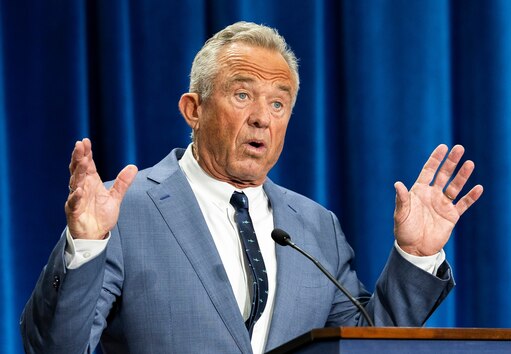
Rep. Thomas Kean Jr. (R-NJ) arrives at the U.S. Capitol on June 30, 2026 in Washington, DC. (Anna Moneymaker/Getty Images)

(WASHINGTON) -- Republican Rep. Tom Kean Jr. of New Jersey arrived back on Capitol Hill on Tuesday after a nearly four-month absence, and announced on the House floor that he received a depression diagnosis that led to an extended hospital stay.

"Now, when people hear the word 'depression,' many people think, simply feel, it means feeling sad, but depression is so much more than that," Kean said. "It is physical, it is emotional, and until you experience it yourself, it is difficult to fully understand how powerful this illness can be."

Kean said he wanted to get back to Congress as quickly as possible, understanding the importance of representing his constituents, but ultimately decided to follow his doctor's recommendations to stay under their care. 

"The doctors recommended that I remain in the hospital to address my illness. They explained to me that this would be the fastest way to recovery, and to be honest, I was hesitant. I didn't think that I had time for it. I had responsibilities to my family, I had responsibilities to my constituents, I had responsibilities to this institution, and like many people, I believed that I could simply push through, but I agreed to follow my doctor's recommendations again, not believing that it would result in a long-term stay," he said.

Kean has not voted in the House since March 5, missing more than 100 roll call votes during his time away.

The congressman had not publicly addressed the reason for his absence prior to Tuesday, raising questions on his whereabouts.

During his absence, Kean won the Republican primary (where he was unopposed) in his reelection bid and received President Donald Trump's endorsement. Kean will face Democrat Rebecca Bennett, a former Navy helicopter pilot, in November for New Jersey's 7th Congressional District, a toss-up district Democrats hope to flip.

Kean, on Tuesday, did not answer multiple questions from reporters on why he didn't communicate with his constituents earlier about his health issues.

In his floor remarks, Kean said he believed he would've been back on Capitol Hill in a few weeks, but soon began to realize that there is "no timeline for healing, there is no timeline for recovery, only the work of getting better one day at a time." 

"Today I am grateful that I listened to my doctors. I am grateful for the exceptional care that I received from doctors, nurses, and support staff. I am grateful that I accepted help, because today I stand before you healthier, stronger, and excited to return to the work that I love," he said.

He then thanked his family, staff, constituents, and medical team for their care and understanding, going on to advocate that "asking for help is not a weakness, it is a strength." 

"This is not a partisan issue. It touches every community, every family and every corner of this country. If sharing my story encourages even one person to seek help, if it gives one family the courage to have a difficult conversation or reminds one person that recovery is possible, then this moment will have been worthwhile," he said as he concluded his speech.

If you or a loved one is experiencing a mental health crisis, please call or text the 988 Suicide & Crisis Lifeline. You will reach a trained crisis counselor for free, 24 hours a day, seven days a week. You can also go to 988lifeline.org.

Copyright © 2026, ABC Audio. All rights reserved.

Supreme Court rolls back federal limits on campaign finance

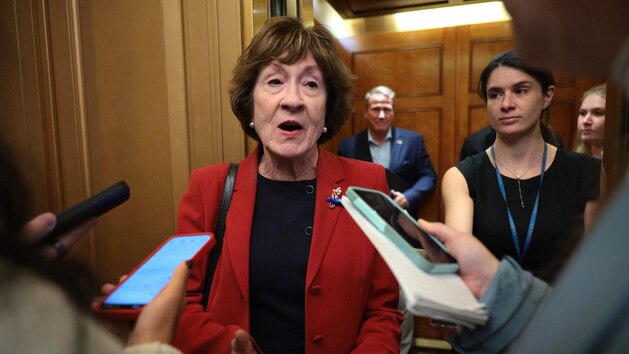
The U.S Supreme Court is seen on June 25, 2026 in Washington, DC. . (Photo by Kevin Dietsch/Getty Images)

(WASHINGTON) -- The Supreme Court on Tuesday rolled back longstanding limits on the amount of money political parties can spend in coordination with individual candidates for federal office -- a ruling that could unleash a wave of new spending before the midterms.

Writing for the majority in the 6-3 ruling, Justice Brett Kavanaugh found that the limits, enacted by Congress following the Watergate scandal, unconstitutionally restrict free speech.

"In short, constitutional text, history, and precedent establish that the political-party coordinated-expenditure limits violate the First Amendment," Kavanaugh wrote.

The ruling hands a victory to the Republican Party -- including Vice President JD Vance, who backed the lawsuit when he was a senator -- which had argued the spending limits were unconstitutional and ineffective in their purported goal of fighting corruption. 

Experts have predicted that a roll back of the restrictions will prompt a flood of political spending and television ads. 

President Donald Trump celebrated the decision in a social media post, calling it, "A BIG WIN FOR REPUBLICANS and, more importantly, The First Amendment!"

Congress first imposed party-candidate spending limits in 1974, and the Supreme Court had previously upheld them as valid safeguards against bribery.

Under the 2026 limits, the Federal Election Commission capped coordinated spending for Senate races to between $130,600 and $4 million depending on state size, and between $65,300 and $130,600 for House races.

Two Republican Party campaign committees, along with then-Sen. Vance and former Rep. Steve Chabot, R-Ohio, filed suit against the FEC in 2022.

By the time the case reached the Supreme Court, the Trump Justice Department -- which had already stopped enforcing the limits -- declined to defend the FEC. The Democratic National Committee and a court-appointed attorney stepped in to argue for keeping the limits.

Tuesday's ruling continues a nearly two-decade-long trend of the nation's high court narrowing campaign finance law on free speech grounds, building on its 2010 Citizens United decision, which lifted caps on corporate campaign spending. 

In addition to finding that the limits infringe on political speech, the majority also noted that the measures were not necessary to combat corruption, citing "other meaningful prophylactic measures" such as earmarking rules and disclosure requirements. 

"In light of the other meaningful prophylactic measures available to the Government, and given the severe infringement on First Amendment-protected political speech that ensues from limiting a political party's spending in support of its candidates, we conclude that the political-party coordinated-expenditure limits are 'disproportionate' and are not 'necessary' and 'narrowly tailored' for the circumvention interest it seeks to protect," Kavanaugh wrote.

Supporters of the spending limits have argued that the rules prevent quid pro quo corruption as well and restrict individuals from using political parties to circumvent other campaign finance rules. 

"If those contributions, which dwarf the base limits on [individual] contributions to candidates, are effectively placed at a candidate's disposal through coordinated spending, they become potent sources of actual or apparent corruption," attorneys for Public Citizen, a nonprofit voter advocacy group, wrote in a brief to the Supreme Court.

Justices Sonia Sotomayor, Elena Kagan, and Ketanji Brown Jackson dissented, writing that the ruling, "jettisons a rule needed to protect our democracy's integrity." 

"The Court ushers back in the same opportunities for quid pro quo corruption that the contribution limits were meant to check," Justice Kagan wrote, adding that the ruling will enable a political "party to serve as an alternative checking account for a campaign." 

The ruling is expected to prompt a flood of spending by political parties ahead of the midterm elections. According to the FEC, 2026 Senate candidates have so far spent more than $490 million ahead of the midterms, while House candidates have spent nearly $1 billion. 

The campaign arms of House and Senate Republicans celebrated the Supreme Court's decision on campaign finance spending as "a decisive First Amendment victory and a major win for the integrity of our political system."

The National Republican Senatorial Committee (NRSC) was one of the main plaintiffs in the case. Jessica Furst Johnson, counsel of record in the case, said the ruling "marks a major turning point for political speech in America."

"For years, federal law irrationally treated coordination between political parties and their own candidates as suspect, subjecting parties to an unfair restriction on First Amendment speech, and limiting information flow to voters," Johnson said. "The Supreme Court correctly recognized those restrictions as unconstitutional, strengthening the marketplace of ideas, and restoring order to our political ecosystem. Make no mistake -- this is a win for voters and the electorate at large."

In a joint statement, Sen. Tim Scott, R-S.C., who chairs the National Republican Senatorial Committee, and Rep. Richard Hudson, R-N.C., who chairs the National Republican Congressional Committee, wrote, "This is a decisive First Amendment victory and a major win for the integrity of our political system ... By striking down these unconstitutional caps on coordinated spending, the Court has restored core political speech and ensured parties can compete on a level playing field."

The campaign arms of House and Senate Democrats, as well as the chair of the main Democratic Party, condemned the Supreme Court's decision on Tuesday as "a win for billionaire donors and special interests who want more influence over the GOP agenda and an invitation for corruption" while saying they are confident Democrats will win in November's midterm elections.

Copyright © 2026, ABC Audio. All rights reserved.

Supreme Court upholds state bans on transgender girls in girls' sports

The U.S. Supreme Court building stands in Washington, D.C., U.S. Photographer: Al Drago/Bloomberg

(WASHINGTON) -- The Supreme Court on Tuesday upheld state bans on transgender girls from participating in girls' and women's competitive sports, reversing a pair of lower court decisions that had blocked the bans as violations of Title IX and the 14th Amendment.

The 6-3 decision came from Justice Brett Kavanaugh.

The ruling in a pair of cases from West Virginia and Idaho effectively upholds laws in those two states, plus 27 others that block trans girls from teams consistent with their gender identity.

The decision marks the first time the high court has weighed in on the heated national debate over transgender athletes.  

The court's ruling is a major setback for the estimated 122,000 transgender American teenagers who participate in high school sports, according to the Williams Institute at UCLA.

For trans teens and their families, the dispute has involved a matter of immutable identity and equal opportunity.  

For many states and top U.S. athletic organizations, including the U.S. Olympic Committee and NCAA, the inclusion of trans athletes has been seen as creating an unfair and unsafe playing field.

The competitive advantage boys and men have physically over girls and women has been well established in physically demanding sports by medical research and serves as a primary basis for distinctions between the sexes in athletics.

Studies have shown testosterone produced during male puberty does lead to more muscle mass, larger hearts and lungs, greater body height and longer limbs on average for boys and men, according to the American College of Sports Medicine.

Many transgender teens who have received gender-affirming medical treatment from a young age argue that they lack any physiological advantage because they have not undergone male puberty.

Twenty-one states allow transgender girls to compete on girls' sports teams, including California and New York, which have laws explicitly protecting the right of trans girls to play.

Becky Pepper Jackson, the only known openly transgender athlete in West Virginia in any sport, sued her state in a bid to continue competing on her high school track team where she throws discus and shot put. Jackson recently won the state championship in girls shot put.

"I've been a girl forever, and playing on the guys' team is going backwards," she told ABC News in an interview last year.

When West Virginia's law takes effect, she will no longer be allowed to participate in girls competitive sports leagues. Competing with boys, she said, would "go against who I am."

Becky, who has openly identified as a girl since third grade, said she has never undergone male puberty, thanks to puberty-blocking medication.

Idaho college student Lindsay Hecox, a former track and cross-country runner who was barred from trying out for her school teams, sued over her state's ban in 2020. Last year, she asked the Supreme Court to drop her case because she no longer wished to compete in sports and didn't want to be in the spotlight. However, Idaho fought to keep the case alive.

Lower courts concluded separately that the state bans discriminate "on the basis of sex" in violation of Title IX, the landmark civil rights law that has promoted equal opportunities for women and girls in athletics, and the Constitution's Equal Protection Clause.

The Supreme Court's conservative majority reversed those decisions and reinstated the laws.

Last year, the same majority upheld a Tennessee law banning some gender-affirming medical treatments for transgender minors, rejecting claims that the law discriminated "on the basis of sex" and saying that states should have leeway to regulate health care in an area of scientific uncertainty.

In 2020, however, the high court concluded in a landmark decision that a Michigan transgender woman fired by her employer for being transgender was discriminated against "on the basis of sex" under Title VII of the Civil Rights Act of 1964.

Justice Neil Gorsuch explained in his majority opinion at the time that her termination was "for traits or actions it would not have questioned in members of a different sex."

Sixty-nine percent of Americans believe transgender girls should only be allowed to play on boys' teams, consistent with their gender assigned at birth, according to a June 2025 Gallup survey.

This is a developing story. Please check back for updates.

Copyright © 2026, ABC Audio. All rights reserved.

Sen. Ruben Gallego under investigation for suspected campaign finance violations

Sen. Ruben Gallego (D-AZ) talks to reporters as he heads for a vote at the U.S. Capitol on June 01, 2026 in Washington, DC. (Photo by Chip Somodevilla/Getty Images)

(WASHINGTON) -- Arizona Sen. Ruben Gallego is under federal investigation for suspected campaign finance violations, a person familiar with the matter confirmed to ABC News.

According to multiple reports, Gallego, a Democrat, used campaign funds to fly his family to the Caribbean, Miami, Nantucket and Puerto Rico. He also allegedly used funds to pay for childcare.

Campaign funds may be used to pay for a candidate’s childcare expenses that are incurred as a direct result of campaign activities, according to the Federal Election Commission.

On Monday, the Senate Ethics Committee closed its inquiry into allegations of sexual misconduct and campaign finance violations after finding no evidence that Gallego violated Senate rules or applicable law, according to a letter released by his office.

In regards to the federal investigation, a Gallego spokesperson told Axios that "it's the least surprising news of the week that this comes immediately after the Senate Ethics Committee cleared Senator Gallego of right-wing smears pushed by the administration."

ABC News has reached out to Gallego's office for comment on the investigation. The Department of Justice has not yet commented on the probe.

Copyright © 2026, ABC Audio. All rights reserved.

Uncertainty clouds next step in US-Iran negotiations

U.S. President Donald Trump talks to reporters in the Oval Office at the White House on June 29, 2026 in Washington, DC. (Photo by Alex Wong/Getty Images)

(WASHINGTON) -- The United States and Iran are sharing conflicting messages about the prospects of a meeting between key negotiators in Qatar this week, injecting even more uncertainty into a peace process that is supposed to be focused on addressing Iran’s nuclear program but has so far been dominated by the Strait of Hormuz.

Talks between the countries were originally scheduled to take place in Switzerland this week and center on nuclear issues, but the venue and agenda for the planned high-level and technical meetings changed following a fresh round of tit-for-tat strikes between the U.S. and Iran over the strategic waterway, a U.S. official and another source said.

While the Trump administration is pushing for direct talks, it is still unclear whether Iranian and American officials will meet face-to-face or communicate solely through Qatari mediators, they added.  

President Trump announced on Monday that a meeting would take place in Qatar’s capital on Tuesday at Tehran’s request.

"IRAN HAS REQUESTED A MEETING. IT WILL TAKE PLACE TOMORROW IN DOHA!” Trump said in a social media post on Monday morning.

White House Press Secretary Karoline Leavitt later said the U.S. would be represented by Special Envoy Steve Witkoff and the president’s son-in-law, Jared Kushner, adding that both high-level and technical talks with Iran were expected to take place.

Esmail Baghaei, a spokesman for Iran’s foreign ministry, painted a different picture of the upcoming meetings. He said that while an Iranian delegation would travel to Doha to discuss the implementation of the interim deal between the U.S. and Iran, their trip bore no connection to Kushner and Witkoff’s visit.

“There are no negotiation meetings with the U.S. side at any level scheduled in the coming days,” Baghaei asserted.

The Iranian regime’s apparent hesitancy to resume in-person talks is a significant step back from the high-level talks that took place in Switzerland earlier this month following the signing of a memorandum of understanding between the countries. After that meeting, Vice President JD Vance reported that lengthy conversations with senior Iranian officials had resulted in a "good foundation for a successful final deal,” and said they made progress towards the creation of a “mechanism” to ensure the Strait of Hormuz would remain open.

The interim deal stipulates that Iran should "make arrangements using its best efforts for the safe passage of commercial vessels with no charge for 60 days only from the Persian Gulf to the Sea of Oman and vice versa.”

But Iran has repeatedly threatened to close the strait, and on Thursday, it attacked a container ship transiting the waterway--setting off a four-day exchange of strikes with the U.S. that stymied ship traffic.

Trump administration officials are eager to restore conditions in the Strait of Hormuz to their pre-war norm, but sources told ABC News that recent intelligence reports predict Tehran will continue threatening to resume its chokehold on the waterway -- a reality that gives Iran significant leverage over the global economy.

The memorandum of understanding also calls for Iran and the U.S. to hammer out a sweeping agreement within 60 days. Almost a quarter of that time has now expired.

While the interim deal says that period can be extended by mutual agreement, Trump has repeatedly declared he wouldn’t let Iran draw out the negotiations.

"We're negotiating from a position of pure strength, pure strength. They know that,” Trump said on Thursday.

Copyright © 2026, ABC Audio. All rights reserved.

Supreme Court limits use of 'geofence warrants' amid cellphone data privacy concerns

The U.S Supreme Court is seen on June 25, 2026 in Washington, DC. (Kevin Dietsch/Getty Images)

(WASHINGTON) -- The Supreme Court on Monday limited law enforcement's use of sprawling "geofence warrants" that track a suspect using cellphone location data from a broad swath of users, including people with no connection to a crime.

In a 6-3 decision, Justice Elena Kagan wrote that collection of location data through a geofence warrant implicates the Fourth Amendment's protections against unreasonable searches and seizures -- a setback for the federal government, which argued the warrants were a critical law enforcement tool that did not amount to a search at all.

"An individual has a reasonable expectation of privacy in records about his cell phone's location, and police intrude on that constitutionally protected interest when they demand the information -- even though for only a limited time, and from a third-party tech company," Kagan wrote for the majority.

Kagan concluded that location data -- which she described as "a personal journal of a user's movements" -- resembles other kinds of private materials such as emails, photographs or documents and should be "shielded from the 'inquisitive eyes' of the government."

"Today's decision follows from the same judicial obligation, to guard against the same risk of undue encroachment. The Fourth Amendment applies, too, when officials tap into Google's 'database of physical location information.' That database is new, but the principle covering it is not: That principle is instead the one our history has given. The Fourth Amendment must, as ever, protect against unjustified governmental intrusion on the privacy of the individual," Kagan wrote.

Justices Samuel Alito, Clarence Thomas and Amy Coney Barrett dissented. In his dissenting opinion, Justice Alito argued the ruling was an "irresponsible escapade" and "destabilizes longstanding Fourth Amendment jurisprudence."

In effect, the ruling requires authorities to obtain a narrowly tailored warrant before examining cellphone data of a broad swath of users in an area. Brett Max Kaufman, senior counsel with ACLU’s Center for Democracy, called the new restrictions on geofence warrants "critical protection against invasive and overbroad government searches of our personal information."

"Law enforcement and courts are on notice that new technology does not open up surveillance loopholes, and strict adherence to the Fourth Amendment’s protections is required," Kaufman said.  

While the Supreme Court ruled that location data is protected by the Fourth Amendment, the justices did not weigh in on the legality of the search that prompted the legal challenge -- instead leaving that issue for the lower courts to reexamine.

The landmark decision stemmed from a case involving a 2019 bank robbery in Virginia. Law enforcement was able to track down the robber using a geofence warrant that included the location data for every cellphone within a 150-meter radius of the robbery.

While Okello Chatrie, the suspect and Supreme Court plaintiff, eventually pleaded guilty to the armed robbery and was sentenced to serve 12 years in prison, his lawyers have argued that the warrant violated his Fourth Amendment rights because it allowed law enforcement to "to search first and develop suspicions later."

Google has since changed its policies on geofence warrants, storing the information on a user's phone rather than a separate database; however, the companies such as Apple, Lyft, Snapchat and Uber still retain location information and could be impacted by the ruling, according to Michael Levy -- a former federal prosecutor and adjunct professor at University of Pennsylvania Carey Law School.

Greg Nojeim, a senior counsel at the Center for Democracy & Technology, applauded the Supreme Court's ruling and said it "slammed that door shut" on law enforcement misusing location data.

"This decision sets the right direction for user privacy: carrying a phone and using apps -- doing the ordinary things cellphone users do -- does not compromise your rights," Nojeim said.

Copyright © 2026, ABC Audio. All rights reserved.

SCOTUS rebuffs GOP bid to block counting of late-arriving mail ballots

Cherry blossoms at the Supreme Court on a windy morning in Washington, D.C. (John Baggaley/Getty Images)

(WASHINGTON) -- In a ruling with direct bearing on the midterm elections, the Supreme Court on Monday narrowly upheld a Mississippi law allowing tabulation of late-arriving mail-in ballots so long as they were postmarked by Election Day.

Justice Amy Coney Barrett, writing for the 5-4 majority, wrote that federal election statutes -- which say nothing about ballot receipt -- do not override states' ability to set their own policies for handling tardy votes by mail. 

"The Framers recognized the difficulty of crafting election laws applicable to every probable change in the situation of the country. So instead of constitutionalizing election law, they decided that a discretionary power over elections needed to be lodged somewhere. Suffice it to say, that power was not lodged in this Court," Barrett wrote.

The decision is a loss for the Republican Party, which brought the case, and the Trump administration, which has pushed to override state election rules nationwide by imposing strict federal limits on voting by mail.

The president on Monday called the Supreme Court’s decision a "tremendous loss" and again called on Congress to pass the SAVE America Act, his signature election and voting reforms legislation.

Senate Majority Leader John Thune has repeatedly said there aren't enough Republican votes for it to pass.

The 29 states that currently accept some timely cast but late-arriving mail-in ballots -- sometimes up to several days after polls have closed -- will be able to continue providing a grace period.

In dissent, Justice Samuel Alito, joined by Justices Clarence Thomas, Neil Gorsuch and Brett Kavanaugh, wrote that the decision flouts the meaning of "election day" as set forth in federal law.

"Not only is today's decision inconsistent with statutory text, legal context, historical practice, and precedent; it also threatens to produce lamentable consequences," Alito wrote. "The majority's holding spawns a slurry of troubling election-law questions and risks further undermining Americans' confidence in election integrity."

The outcome is a win for Mississippi, which had defended its policy of accepting ballots up to five days after voting had ended, and voting rights advocates who had argued that decades of legal precedent supported the primary authority of states to run their own elections. 

Voters heavily reliant on the U.S. Postal Service, such as rural, overseas and disabled voters, had feared a higher risk of having ballots rejected if delivery is delayed, election watchdog groups said.

Lateness is the primary reason mail ballots are rejected nationwide, according to the U.S. Election Assistance Commission (EAC).

During the 2024 election, 28 million mail ballots were cast in the 14 states with postmark deadlines and grace periods, according to EAC. Roughly 725,000 were not counted because they were late. 

The Supreme Court ruling comes as Trump has pushed aggressively to increase federal oversight of mail-in voting. 

A Trump executive order signed in March 2026 would require states to submit approved voter lists to the U.S. Postal Service, which in turn would be tasked with ensuring ballots are only delivered to eligible residents. 

Last week, Federal District Court Judge Indira Talwani of Massachusetts put the order on hold, writing in her decision, "The Constitution reserves the power to determine voter eligibility to the States alone. Neither the Executive Branch nor Congress may interfere with this power."

The Postal Service has not yet implemented a proposed policy change to comply with Trump's order, but a top USPS official confirmed to Congress that his agency would refuse to deliver ballots unless states turn over lists of voters. 

"No law enacted by Congress delegates authority to control mail-in voting to USPS. The voting-related guidance currently issued by USPS is not binding on the States, merely recommended," Talwani’s ruling said. 

Copyright © 2026, ABC Audio. All rights reserved.

Supreme Court blocks Trump, for now, from firing Fed Board member Lisa Cook

Lisa Cook, governor of the US Federal Reserve, during the Stanford Institute for Economic Policy Research (SIEPR) Policy Forum at Stanford University in Stanford, California, US, on Wednesday, May 27, 2026. : David Paul Morris/Bloomberg via Getty Images

(WASHINGTON) -- The Supreme Court has blocked for now President Donald Trump's unprecedented attempt to fire a member of the Federal Reserve Board of Governors, Lisa Cook, over the allegation of gross negligence and without any formal opportunity for her to answer the claims. 

In a 5-4 ruling, Chief Justice John Roberts, writing for the court's majority, upheld limits Congress imposed on a president's attempt to remove members of the Fed as a legitimate protection of the institution's historical independence. 

While the president has the ability to fire Cook "for cause," he wrote, "the President failed to afford Cook the procedural protections to which she was entitled by statute. Without such protections, she could not properly dispute the charges the President laid against her."

Roberts said the majority's "narrow" decision took no position on the underlying allegations against Cook or whether the president met the standard for removing her. The outcome leaves the door open to the possibility that Trump could continue to try to press his case. 

"The ultimate question of whether the President can remove Cook for cause will depend in part on the underlying facts. In this opinion, we have not addressed the facts, as they have yet to be found or analyzed under the relevant legal standards," Roberts wrote. "Rather, we have simply addressed the parties' arguments about the appropriate legal standards under which the facts must be evaluated." 

Cook, a Democratic appointee who has 10 years left on her 14-year term, will retain her position for now. She is the first Black woman to serve on the central bank's advisory committee. 

Justices Clarence Thomas, Samuel Alito, Neil Gorsuch and Amy Coney Barrett dissented in the case. 

Barrett wrote that the court's decision amounts to "significant interference with the President's removal authority" constituting "irreparable harm" while the litigation continues. 

While the court has recognized expansive power of a president over executive branch agencies, it has appeared to draw a line at the Fed, which has a long history of independence from direct White House interference. 

Federal law allows presidents to remove a Fed governor, but only for cause. The heart of Trump's appeal before the high court involved what constitutes "cause" -- who gets to decide that and what due process may be owed.

The president had asserted unchecked power, insisting allegations of mortgage fraud against Cook -- raised by a member of Trump's administration, Federal Housing Finance Agency Director Bill Pulte -- were sufficient basis alone for her removal.

Pulte, who Trump has since appointed to serve as acting director of national intelligence, said in a post on X, "As I have repeatedly said, I believe Lisa Cook will be indicted for mortgage fraud." 

Trump has claimed Cook illegally filed a mortgage application for a second home as a "primary" residence in an effort to secure more favorable loan terms, at the very least creating an impression of impropriety. The Justice Department has opened a criminal investigation. 

Cook, who refused to resign and has not been charged with a crime, insists through her attorneys that relying on "one stray reference" in a 2021 mortgage document amounts to pretext for a politically motivated effort to manipulate the Fed's policy board.

"This was never about mortgage documents signed years before I became a Federal Reserve governor. It was an attempt to remove me on a manufactured pretext because I refused to bow to political pressure and continued to set interest rates based only on what would best serve the American people," Cook said in a statement after the high court's decision. "That is the most fundamental obligation of a Federal Reserve governor. Today's ruling affirms a principle that has underpinned sound economic stewardship for generations."

The case was being examined by the court in a very preliminary posture, focusing primarily on Trump's request to stay a lower court order that Cook be allowed to remain on the job as litigation continues. No lower court has thoroughly considered the legal or constitutional issues connected to the dispute.

The court's decision is widely seen as a victory for the independence of the Federal Reserve -- at least in the near term -- in the face of Trump's extraordinary effort to influence the central bank.  

Copyright © 2026, ABC Audio. All rights reserved.

In major blow to independent agencies, Supreme Court upholds Trump firing of FTC commissioner

The U.S. Supreme Court building stands in Washington, D.C., U.S. Photographer: Al Drago/Bloomberg

(WASHINGTON) -- In a landmark decision that could transform the federal government, the Supreme Court has voted to allow President Donald Trump to remove a Democratic member of the Federal Trade Commission, Rebecca Slaughter, for policy reasons, rolling back 90 years of legal precedent that had prevented at-will removal of independent agency officials and significantly expanding presidential power.

The 6-3 decision came from Chief Justice John Roberts.

Writing for the majority, Roberts declared "for cause" removal protections imposed by Congress at more than two dozen independent, bipartisan government agencies a violation of the separation of powers. 

"What text, history, and structure settle, our precedent confirms -- the President may remove his subordinates at will," Roberts wrote. 

The decision gives Trump and future presidents more control over the government and effectively ends the bipartisan, independent nature of regulatory agencies that oversee many aspects of American life. 

President Trump, in a post to his social media platform, called the Supreme Court's decision  a "BIG WIN" and "one of the most important ever given with respect to Presidential Powers."

In her dissent, Justice Sonia Sotomayor, joined by Justices Elena Kagan and Ketanji Brown Jackson, accused her colleagues of endorsing a theory of "total executive control" unimagined by the nation's founders. 

"The result is a President who emerges with far greater power than ever before," Sotomayor wrote. "It is a power, however, that neither the People, nor Congress, nor the Constitution bestowed upon him. In granting the President this unbridled authority, the Court upends its precedent, misconstrues our history, and sheds any pretense of judicial modesty. I respectfully dissent."

Since the New Deal era, independent agencies -- historically led by subject-matter experts from both parties -- have policed stock trades, transportation systems, election campaigns, consumer product safety and broadcast licenses. 

Giving the president more direct control over who serves on those bodies has long been a goal of conservatives, who have objected to unelected bureaucrats wielding too much power with little accountability.  

The ruling is a loss for liberals who have long championed a role for agencies like the FTC, Federal Election Commission, Securities and Exchange Commission, Federal Communications Commission and dozens of others insulated from politics in the interest of the regulatory consistency. 

The court's decision does not eliminate the agencies themselves but will allow them to be packed with only Republicans or only Democrats, if a president wishes, giving the White House more direct control over their functions. 

The conservative majority effectively overruled a unanimous 1935 Supreme Court decision involving the FTC -- Humphrey's Executor v. U.S. -- which had previously affirmed limits on a president's ability to fire members of the commission only for cause. 

"Humphrey’s Executor is just a dried husk of whatever people used to think it was," Chief Justice John Roberts said bluntly during oral arguments in December. 

Copyright © 2026, ABC Audio. All rights reserved.


Facebook